
Control Dosimeters – What Are They and How Are They Used?
Control Dosimeters – What Are They and How Are They Used?
If you manage a radiation monitoring program, you have likely come across the term "control dosimeter." But what exactly are they, and why do they matter? Understanding how Control dosimeters work is an important part of running an accurate and compliant dosimetry program. This guide breaks down what they are, how they are used, and the common industries that use them.
What Is a Control Dosimeter?
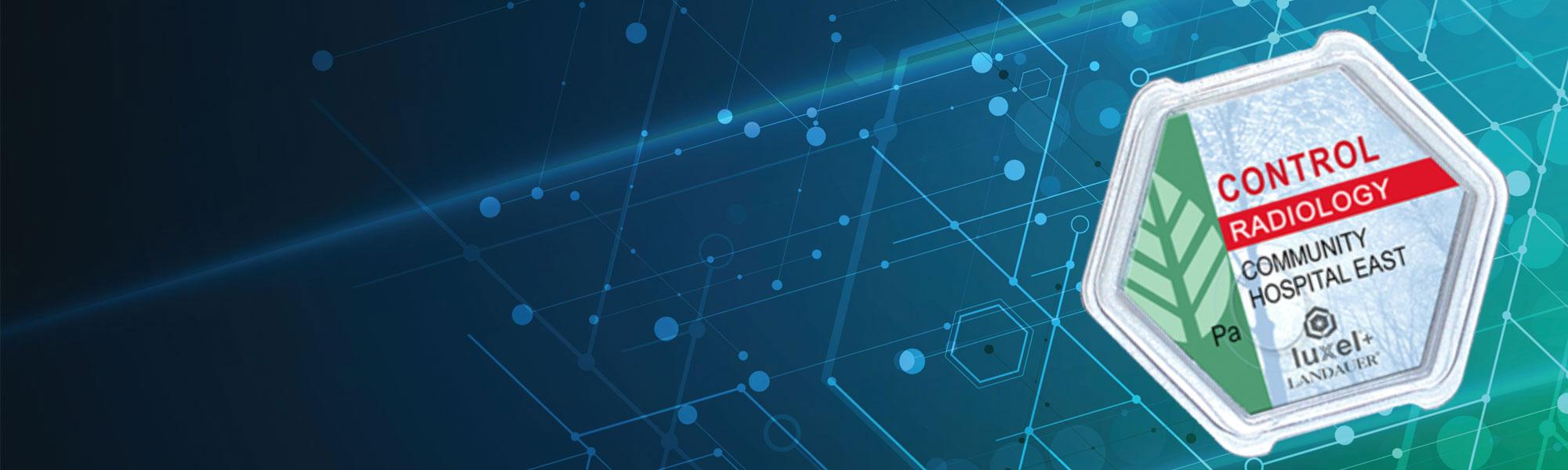
The simplest control dosimeter definition is a dosimeter that is set aside specifically to measure background radiation during a monitoring period. It is not worn by any radiation worker. Instead, it captures the ambient radiation exposure that occurs naturally in the environment and during dosimeter shipment. These dosimeters are also used to measure any radiation exposure while the personal dosimeters are in transit to and from the LANDAUER facility.
A control dosimeter badge is identical in design to the personal dosimeters your employees wear on the job. Every type of dosimeter used in your facility requires its own corresponding control dosimeter. For example, if your team wears Luxel+ badges and Saturn rings, you would need a separate Control dosimeter for each type.
What’s the Difference Between Control Dosimeters and Personal Dosimeters?
Control dosimeters and personal dosimeters are physically identical, but they serve very different purposes. Personal dosimeters are worn by radiation workers to measure the dose they receive on the job. Control dosimeters are not intended to be worn by workers.
Instead, they are stored away from radiation sources to measure background radiation only. The data from Control dosimeters is used to correct personal dosimeter readings, ensuring that occupational dose calculations reflect only workplace exposure.
How Control Dosimeters Work
So how does the control dosimeter badge work? It works by passively collecting radiation data in the same way personal dosimeters do. However, unlike personal dosimeters, they are stored away from radiation sources and never worn by workers. This allows them to record only the background radiation present in the environment during the monitoring period. Control dosimeters also measure radiation during transit (if packages are X-rayed during their shipment as well as the background radiation exposure during this time).
For example, when dosimeters are returned to LANDAUER for analysis, the dose recorded by the control dosimeter is subtracted from the dose recorded by each personal dosimeter. The remaining dose represents the occupational exposure a worker received as a result of working with radiation sources. This calculation is what makes accurate occupational dose reporting possible.
What Is Occupational Dose?
Occupational dose is the amount of radiation exposure a worker receives as a direct result of their job duties. It does not include background radiation from natural sources like cosmic rays or terrestrial radiation, since everyone is exposed to these regardless of occupation.
By subtracting the background dose recorded by a Control dosimeter from the total dose recorded by a personal dosimeter, LANDAUER can calculate an accurate occupational dose for each worker. This figure is what regulatory agencies use to confirm that exposure limits are not met.
Why Are Control Dosimeters Important?
Control dosimeters play a critical role in the integrity of any occupational radiation monitoring program. They provide the data needed to produce accurate, meaningful dose records for every worker in your program. Here is a closer look at why they matter:
- Ensuring Reliable Dose Measurements: Control dosimeters establish a baseline that allows for precise calculation of each worker's true occupational dose. Without this baseline, dose reports would include background radiation that has nothing to do with workplace exposure.
- Preventing False Exposure Readings: Background radiation and incidental exposure during shipping can inflate dose readings if left unaccounted for. Control dosimeters isolate these variables so your readings reflect actual working conditions.
- Supporting Workplace Radiation Safety Programs: Accurate dose data is the foundation of any effective radiation protection program. Control dosimeters help ensure that your safety program is built on reliable, defensible measurements.
- Improving Regulatory Compliance: Applicable regulatory authorities require accurate occupational dose records as part of compliance. Control dosimeters help your program meet those standards with confidence.
When Are Control Dosimeters Required?
Regulatory and industry guidelines require accurate occupational dose monitoring for anyone who works with or near radiation sources. In the United States, the Nuclear Regulatory Commission and state radiation control programs set the standards for occupational monitoring. Control dosimeters are an accepted and widely recommended practice for meeting those standards accurately.
Formal occupational radiation monitoring programs are expected to account for background and transit related radiation when determining occupations dose. Control dosimeters are the standard tool used to accomplish this. Without them, the dose reported to regulatory agencies may be less accurate and difficult to justify during audits or inspections. LANDAUER uses a customer background average if a Control dosimeter is not returned to ensure accuracy in the occupational doses reported.
There are also specific situations where Control dosimeters become especially critical. Facilities in areas with elevated natural background radiation, such as high-altitude locations, need reliable baseline measurements more than most. Similarly, programs that ship dosimeters over long distances or through varying environments benefit greatly from the correction that Control dosimeters provide.
How Control Dosimeters Are Used
A common question facilities ask is where does the control dosimeter go? Proper use of a control dosimeter starts with where you store it. Control dosimeters should be kept in an area that is away from all radiation sources but close to where personal dosimeters are stored when not in use.
A control dosimeter should never be issued to a radiation worker or placed inside a shielded container. Either of these situations would distort the background radiation measurement and compromise the accuracy of your dose calculations. The Radiation Safety Officer should review and approve all storage locations to ensure proper placement.
Industries That Commonly Use Control Dosimeters
Control dosimeters are used across a wide range of industries where occupational radiation exposure monitoring is required. Any setting where workers are regularly exposed to radiation sources as part of their job should be using them as part of a complete dosimetry program. Common industries include:
- Healthcare and Medical Imaging: Radiologists, technologists, and other healthcare workers who operate imaging equipment rely on accurate dose monitoring to stay within safe exposure limits and ALARA principles.
- Dental Practices: Dental professionals who take X-rays regularly are subject to occupational monitoring requirements and benefit from the accuracy Control dosimeters provide.
- Veterinary Clinics: Veterinary staff who assist with animal radiography need the same level of dose accuracy as their counterparts in human medicine.
- Industrial Radiography: Workers who use radiation to inspect welds, pipelines, and structural components operate in environments where precise dose tracking is essential.
- Nuclear Energy Facilities: Plant workers face some of the most rigorous radiation monitoring requirements in any industry, making Control dosimeters a non-negotiable part of their programs.
- Research Laboratories and Universities: Scientists and students working with radioactive materials or radiation-producing equipment must maintain accurate exposure records throughout their work.
When Should You Send Your Control Dosimeters to LANDAUER?
Control dosimeters should be sent to LANDAUER on the same schedule as your personal dosimeters. Most monitoring programs operate on a monthly, bimonthly, or quarterly cycle, and Control dosimeters should follow the same timeline to ensure accurate background corrections for that period.
Sending them together also helps account for any incidental exposure that occurs during shipping, since both sets of dosimeters travel under the same conditions. If you are unsure of your facility's monitoring schedule, your Radiation Safety Officer or LANDAUER representative can confirm the right timing for your program.
Choosing a Dosimetry Provider
Running a reliable radiation protection program starts with choosing the right partner. LANDAUER has been a trusted name in dosimetry for decades, providing radiation dosimeters, readers, and comprehensive program support to facilities across a wide range of industries. Our team understands the regulatory landscape and the practical challenges of managing an occupational monitoring program day to day. Explore our radiation dosimeters and readers to find the right solution for your facility.
Whether you are building a new radiation protection program or looking to improve an existing one, LANDAUER is here to help. Our experts can walk you through everything from dosimeter selection to control dosimeter protocols and compliance requirements. Contact LANDAUER today to get started with a dosimetry program you can count on.

Frank has accumulated extensive expertise in radiation safety policies and procedures by working as a Radiologic Technologist, Army Radiation Safety Officer, instructor, and inspector. Frank's 35+ years of experience include managing radiation safety programs, conducting radiation surveys/inspections, and implementing safety measures to minimize radiation exposure. Frank worked as a radiographer before obtaining a degree in Radiologic Sciences and a commission in the US Army as a Nuclear Medical Science Officer, retiring as a Lieutenant Colonel.